
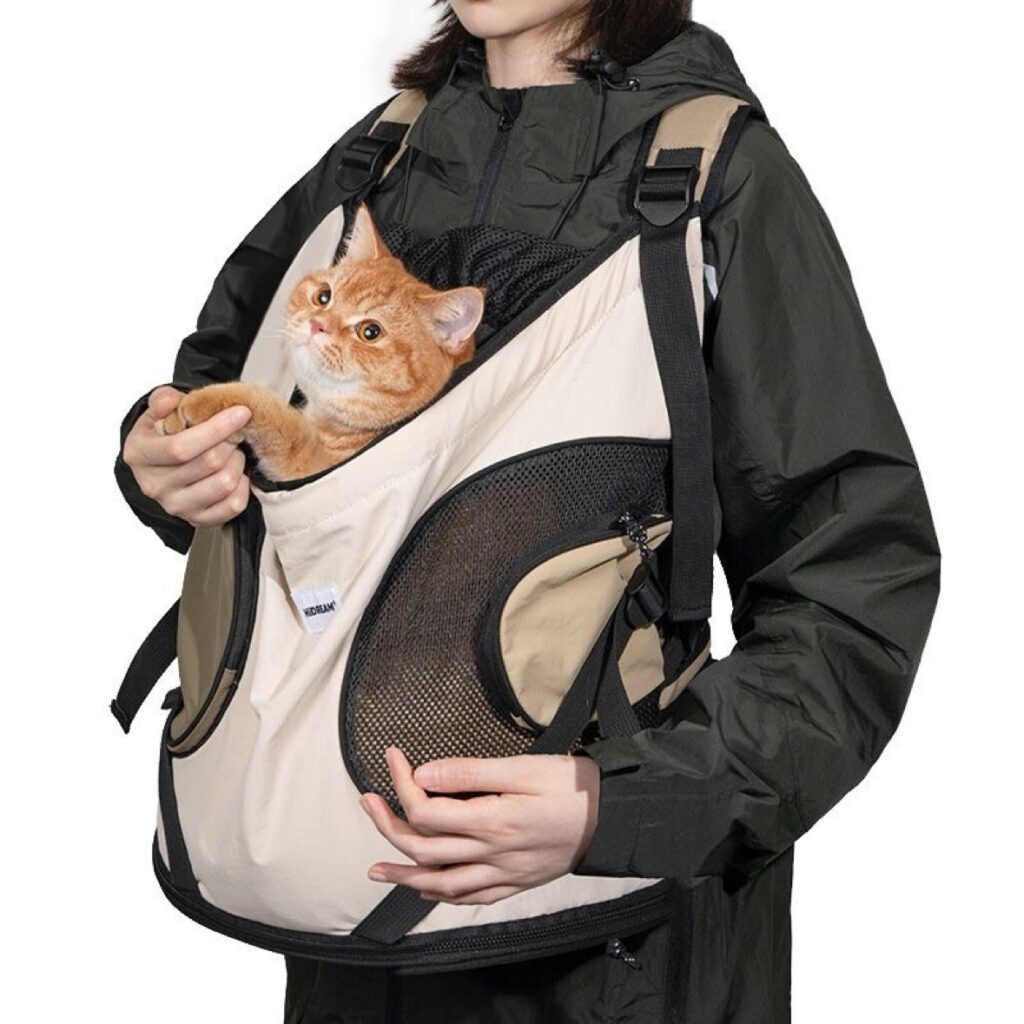
If you carry your dog in a backpack carrier, you know the truth: that cozy cabin gets gross fast. Shed fur wedged into every seam, muddy paw prints on the base, treat crumbs in the pockets — and a distinct eau de wet dog after a rainy hike. A dirty carrier isn’t just unpleasant — trapped odor and bacteria can irritate your pet’s skin. The good news: cleaning is simple once you have a routine. Here’s the playbook — a 5-minute habit after every trip, a monthly deep clean, and how to kill odors without harsh chemicals.
The Short Answer: Spot-Clean Often, Deep-Clean Monthly
Think of your carrier like a dog bed you wear. A quick wipe-down after every outing plus a proper hand wash about once a month keeps it fresh, hygienic, and structurally sound for years. Most soft-sided carriers are hand-wash only — the internal frame and padded panels that give the backpack its shape don’t survive a washing machine. Always check the care label inside your carrier first, and when in doubt, hand wash.
1. Empty It and Shake Out the Loose Stuff
Every cleaning session starts the same way: take everything out. Empty all pockets, remove any detachable pads or liners, and turn the carrier upside down over a trash bin. Give it a firm shake — you’ll be amazed how much fur, sand, and crushed treats fall out.
For fur clinging to the fabric, a lint roller or rubber pet-hair brush works far better than your hands. Run it over the interior base and mesh panels, where fur loves to tangle.
2. Spot-Clean After Every Outing (The 5-Minute Habit)
This habit prevents 90% of odor problems. After each trip, wipe the interior base and walls with a damp cloth and a drop of mild, fragrance-free soap — the kind you’d use on pet bowls. Hit the mesh ventilation windows where drool and nose prints collect — a soft toothbrush gets into the weave without tearing it — and wipe muddy paw prints off the exterior before they dry. Then leave the carrier unzipped and open for an hour so moisture evaporates instead of getting trapped inside.
3. The Monthly Deep Clean, Step by Step
Once a month — or sooner after a muddy adventure — give it a full wash:
- Prep: Remove pads and liners, shake out debris, and pre-treat visible stains with a dab of mild soap.
- Fill a basin with lukewarm water (never hot — heat can warp plastic frames and fade fabric) and add a small amount of mild detergent or pet-safe fabric cleaner.
- Submerge and gently scrub with a soft sponge. Work the seams, corners, and straps where grime hides; use the soft toothbrush on mesh panels.
- Rinse thoroughly. Soap residue attracts dirt and irritates skin, so rinse until the water runs clear — usually two or three fills.
- Press out water gently. Don’t wring or twist, which can bend the internal frame.
Our Pet Front Carrier Backpack for Cats & Small Dogs is built with a sturdy internal frame and padded panels — exactly why the hand-wash approach matters: it keeps the structure crisp and supportive trip after trip.
4. Deodorize the Safe Way
If your carrier still smells like wet dog after washing, skip the perfumed sprays — strong fragrances just mask odor and can bother your pet’s sensitive nose. Instead, sprinkle baking soda inside the dry carrier, leave it overnight, then vacuum or shake it out; it neutralizes odor rather than covering it. Adding half a cup of white vinegar to the rinse water during the deep clean also helps — the vinegar smell disappears as it dries, taking other odors with it. And nothing beats a few hours in a breezy, shaded spot; fresh air is a natural deodorizer.
What not to use: bleach (damages fabric and is dangerous if residue remains), heavily scented detergents, and essential oils — several common ones, including tea tree, are toxic to cats and dogs.
5. Dry It Completely Before Storing
This is the step people skip, and it causes the most damage. A carrier zipped up while still damp becomes a mold and mildew incubator — musty smell, stained fabric, and a potential health issue for your pet. Air dry only: hang it or stand it open in a ventilated spot, with a fan to speed things up. Never use a dryer — heat warps frames, melts mesh, and shrinks padding. Don’t store it until it’s bone dry; if the base padding feels cool or clammy, give it more time.
6. Don’t Forget the Zippers, Straps, and Mesh
The fabric gets all the attention, but the hardware determines how long your carrier lasts. Run a dry toothbrush along zipper tracks to clear grit, then zip and unzip a few times — a tiny dab of zipper lubricant (or a pencil rubbed along the teeth) keeps them gliding. Check straps and buckles for fraying or cracked plastic; a strap that fails mid-hike is a safety issue. Inspect mesh windows for snags or holes — a torn panel compromises ventilation and containment, which means repair or replacement time.
7. Know When to Replace Instead of Clean
Cleaning has limits. Retire the carrier if the smell survives a full deep clean plus baking soda, zippers won’t stay closed, mesh is torn, base padding has flattened permanently, or the frame is bent and the backpack no longer holds its shape. A carrier is safety equipment — when it’s structurally done, it’s done.
Frequently Asked Questions
Can I put a dog carrier backpack in the washing machine? Almost certainly not — the internal frame and padded panels will warp or break. Hand washing in lukewarm water is the safe default.
How do I get the dog smell out of a carrier backpack? Wash as described above, treat with baking soda overnight, and air it out in a breeze. Persistent odor usually means the carrier was stored damp at some point — make sure it’s fully dry before zipping it up.
How often should I clean a dog carrier backpack? Spot-clean after every outing, deep-clean monthly, and wash immediately after muddy, rainy, or beach trips. Daily users should deep-clean every two to three weeks.
Can I use regular laundry detergent? A small amount of mild, fragrance-free detergent is fine. Avoid bleach, optical brighteners, and heavy perfume — residue sits against your pet’s skin and nose for hours. Pet-safe fabric cleaners are the best choice.
My carrier is for a cat — does any of this change? Not really; the same routine works for cat carriers too — though cats are pickier about smells, so the fragrance-free rule matters even more.
The Bottom Line
A clean carrier is one your dog actually wants to ride in — and one that lasts for years of adventures instead of one smelly season. Five minutes after each trip, a proper wash each month, bone-dry before storage: that’s the whole system.
If your current carrier has seen better days, check out our Pet Front Carrier Backpack — and browse the rest of our dog gear to get kitted out for your next outing. Happy trails!