
The Short Answer: Which Brush for a Long-Haired Cat?
If you only buy one thing, get a slicker brush with flexible pins — it handles daily maintenance for most long-haired cats. Add a wide-tooth steel comb to check your work (it finds the tangles the brush glides over), and a deshedding tool for 1–2 sessions a week during heavy shedding. Brushing isn’t cosmetic: for long-haired cats it prevents painful mats, cuts down hairballs, and keeps loose fur off your furniture. Read on for our guide to finding the best brush for long-haired cats shedding season after season.
1. Know What Kind of Coat You’re Dealing With
Not all long hair is the same. Silky single coats (think Persian or Ragdoll) tangle into mats quickly but shed less visibly; dense double coats (Maine Coon, Siberian) shed in dramatic seasonal waves and build a thick undercoat that hides knots near the skin. Run your fingers deep into the fur — if you feel resistance or tiny knots close to the skin, that’s the undercoat talking, and it’s where mats are born.
Shedding season hits twice a year — spring and fall — and each wave lasts 3–4 weeks. During those waves, daily brushing isn’t overkill; it’s the difference between a manageable routine and an emergency grooming appointment. Browse our grooming essentials to see which tools fit your cat’s coat type.
2. The Three Tools That Actually Matter
Slicker brush (daily driver). Fine, angled wire pins on a cushioned pad. It lifts loose topcoat fur and breaks up small tangles before they become mats. Look for pins with rounded or coated tips — bare wire scratches sensitive skin, and a scratched cat stops cooperating fast.
Wide-tooth steel comb (the inspector). This is the tool most people skip, and it’s the most honest one. After brushing, run the comb through the fur. If it glides, you’re done. If it snags, there’s a tangle the slicker missed. A comb reaches the undercoat where mats start, and it’s the only reliable way to confirm a section is truly tangle-free — especially around the armpits, belly, and behind the ears.
Deshedding tool (shedding-season specialist). A stainless-steel edge that reaches through the topcoat to pull out loose undercoat without cutting. Powerful during shedding waves — one 10-minute session can fill a small bag with fur that would otherwise end up on your sofa. Limit it to once or twice a week; overuse on the same spot irritates skin.
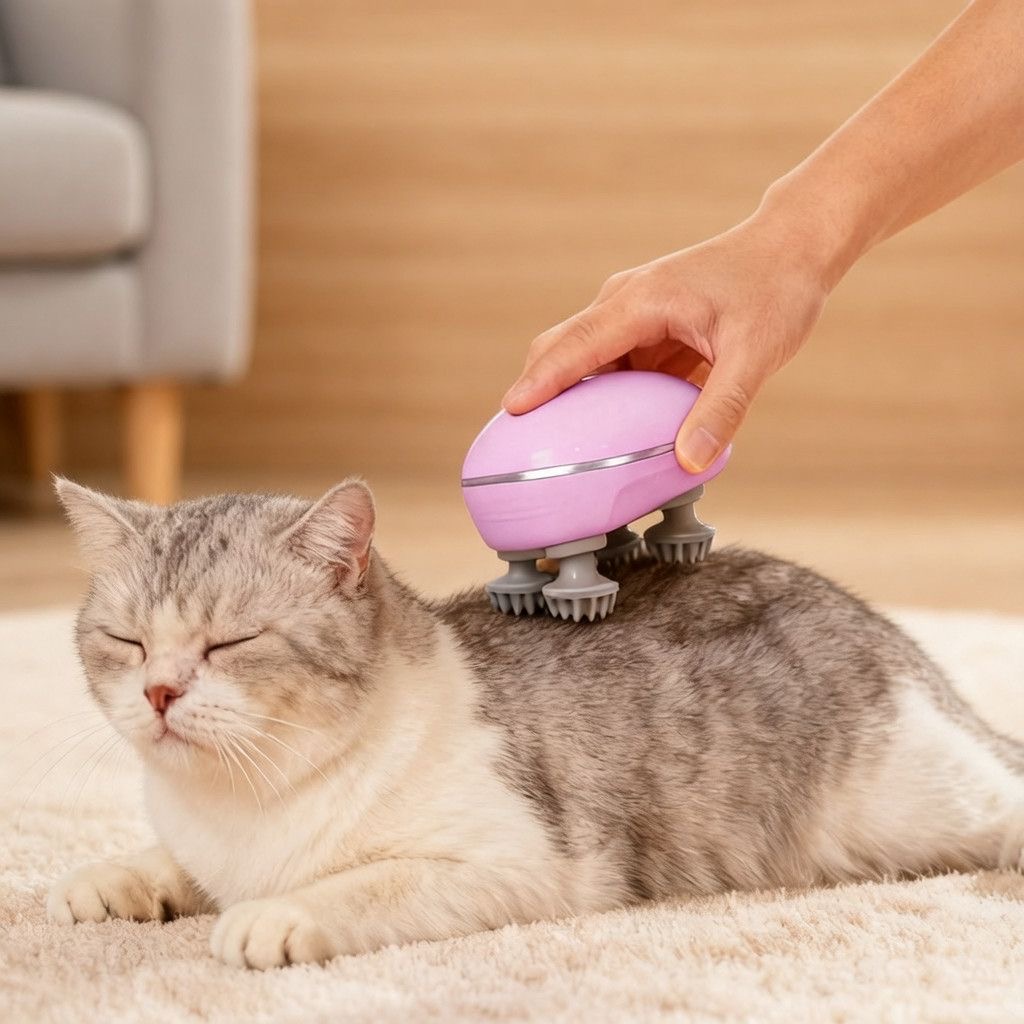
What to skip: bristle-only brushes (they polish the surface and miss everything underneath), cheap slickers with uncoated pins (scratchy), and electric “self-cleaning” gimmicks that are usually just a louder slicker. For long-haired cats, surface tools are decoration.
3. The Weekly Routine That Keeps Shedding Under Control
Normal weeks: brush 3–4 times, about 5 minutes each. Shedding-season weeks: daily, 8–10 minutes. Same order every time, so it becomes habit:
- Start with the slicker, brushing in the direction of hair growth — back, sides, then the ruff around the neck. Light, even strokes.
- Hit the trouble zones: armpits, belly, behind the ears, and the britches (the long fur on the back of the thighs). Mats start here because the fur rubs and felts.
- Comb-check everything. Run the wide-tooth comb through each section. Snag = tangle = go back with the slicker, or work it out by hand.
- Finish with the deshedding tool (1–2x/week in shedding season) on the back and sides only — never on the belly or legs, where skin is thin.
Ten minutes, done. The fur you collect in the brush is fur that never reaches your couch, your clothes, or your cat’s stomach.
4. Technique: Pressure, Direction, and Reading the Cat
Always brush with the direction of growth, never against it — going against the grain pulls and hurts, and it doesn’t remove more fur. Keep the brush nearly flat against the body; digging in with the corner of a slicker is how scratches happen. On bony areas (spine, hips), use even less pressure.
Read the body language: slow blinks and purring mean continue; rippling skin, tail flicking, or flat ears mean you’re pressing too hard or overstaying — move on or stop. Most cats have a 5-minute cooperation budget; spend it on the mats, not the already-smooth back. End every session on a good note with a treat, so the brush predicts good things.
5. Mats: Prevention Beats Removal
A mat is felted fur — tangles locked together near the skin — and they’re painful, pulling with every movement. The belly and armpits mat first. If you find a small one, don’t pull it: hold the base of the fur between your fingers (so you’re not tugging skin), and tease it apart with the comb, working from the tip inward. For a tight mat, carefully split it lengthwise with blunt-tipped scissors pointed away from the skin — or better, leave it to a groomer. Never use clippers or sharp scissors flush against the skin; cat skin is paper-thin and tears easily.
If mats keep forming despite regular brushing, something else may be going on: older or arthritic cats groom themselves less, and a sudden increase in matting can signal a health change worth mentioning to your vet.
6. Costume Season Bonus: Long Fur + Dress-Up
Costumes rub against long fur and create tangles fast — especially around the neck and shoulders. If your cat is getting dressed up, brush thoroughly before the costume goes on and after it comes off. Our lion mane costume safety guide covers fit and supervision; think of brushing as the before-and-after bookend that keeps the fur underneath happy.
Quick FAQ
How often should I brush my long-haired cat?
Three to four times a week normally, daily during the spring and fall shedding waves. Skipping a week is how small tangles become mats that need professional help.
Is a deshedding tool safe for long-haired cats?
Yes, when used correctly: once or twice a week, on the back and sides only, with light pressure. Never use it on thin-skinned areas like the belly, and stop if the skin looks pink or irritated.
Can I just shave my long-haired cat for shedding season?
It’s an option for severe matting, but not a first resort — shaving removes the coat’s insulation and sun protection, and many cats find the process stressful. Regular brushing almost always beats the razor.
Why does my cat hate being brushed?
Usually one of three things: a brush with scratchy uncoated pins, too much pressure, or sessions that run past the cat’s patience. Switch to coated-tip tools, lighten up, keep it under five minutes, and always end with a treat.
Do indoor long-haired cats shed less?
Not really — indoor cats shed year-round because artificial light disrupts the seasonal cycle. The upside: no dramatic seasonal waves. The downside: there’s no off-season for brushing either.
The Bottom Line
Slicker for maintenance, steel comb for honesty, deshedding tool for the heavy weeks — that’s the whole kit. Five to ten minutes a few times a week prevents the mats, hairballs, and fur-covered furniture that make long-haired cat ownership feel like a chore. Your cat will never thank you out loud, but a mat-free belly and a purr during brushing are close enough.